
I wake up with a shudder because of a burst of noise, and look at my watch. It is 3:33. The noise resumes, it sounds like the call to prayer; but it is not a prayer time. The sound comes from only one mosque. After ten minutes silence, a short sermon is blasted from that mosque’s speakers. What is this? A special session? Why so loud? Then I fall asleep again until 4:30, when all hell breaks loose: one mosque after the other picks up the morning prayer call, followed shortly by sermons. The cacophony is actually quite beautiful. Check out a short audio recording I made in my bed here. Then there’s some reprieve, until daylight (6am) when the next round of call to prayers takes place. The first two nights this will shake me out of my bed; the third night I already sleep through the nighttime prayers and wake up at 6am.
After a thus interrupted night rest, I find my way downstairs on my first morning in Erigabo and wait until the kitchen gets going. Mercifully, there is an Italian coffee machine and the barista knows how to make a good macchiato.
I desperately need a translator; one that has been found by Da’ar introduces himself as I take my breakfast: Ahmed Keyse, a school principal who speaks good, deliberate English. He wrongly pronounces some words that he has read but never heard, but does so with the conviction of an English language teacher who is never contradicted or made fun of. He seems an intelligent but irascible man, and a bit too full of himself. I agree to try him out paying him a proper daily wage. Next in is Ismail, a young guy from the company Elsar media, which has often worked with Beeyo Maal, producing all its videos. He seems bright and friendly but hardly understands a word of English. Through Keyse we agree that Ismail will accompany me on my five or six field visits, documenting them with photos, videos and three times drone footage. I tell him I want to produce a short documentary during my visit, and he seems very pleased and eager.
Then Luul Si’id, the chairwoman of the Beeyo Maal women’s cooperative that 2Mages buys all its resins from, comes into the hotel with her grandson as a translator. Luul is an elderly lady from a village in the mountains northwest of Erigabo. She has had no formal education but is a renown frankincense sorter and staunch activist for the women’s cause, and has been leading the cooperative since it was established. In the frankincense trade, men do the harvesting and transportation, while women sort, clean and pack the resins. Women are thus better positioned to sell resins, and the community benefits more from how they spend their money. So they should run the trade. I am glad to finally meet Luul after having heard much about her these past two years.
Da’ar joins us in the restaurant around 9 looking pert, then Indho comes and tells us that Ahmed is waiting around the corner with the other car and the SPUs. We can go, our car with me in the front seat leading the way. This is a throwback to another time of my life: the NGO period.

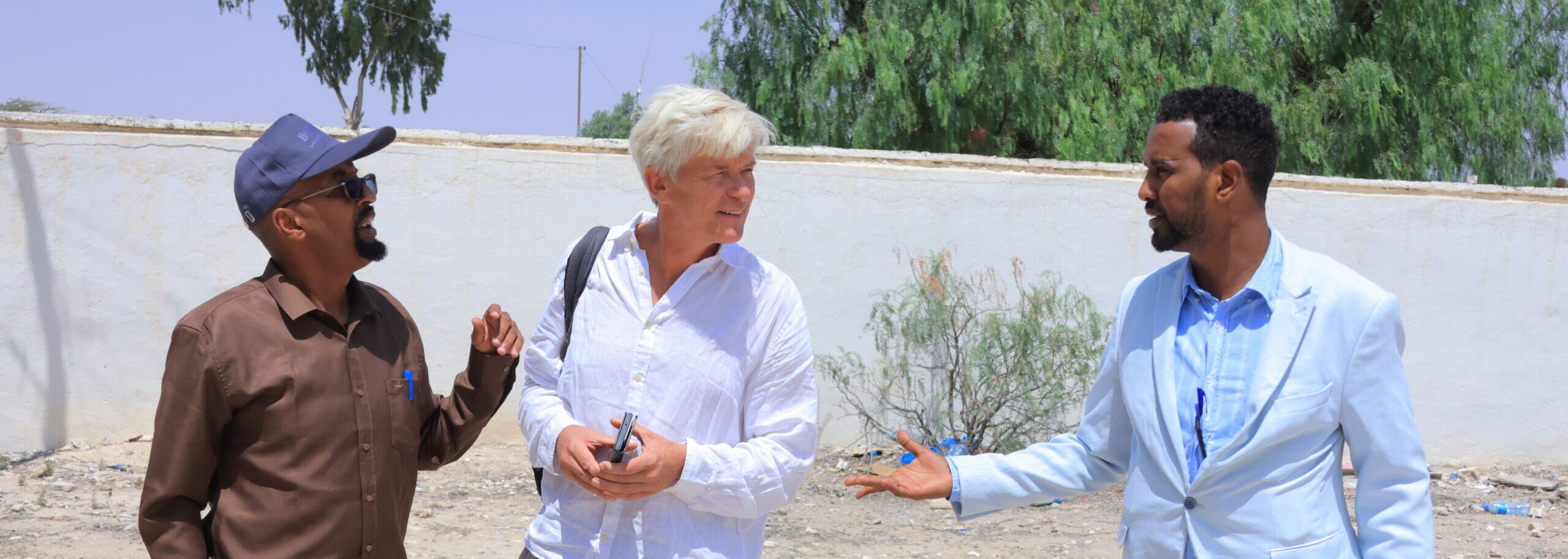
The Beeyo Maal space in Erigabo with Abdirisaq
Together we first visit the storage room and main space of Beeyo Maal. About a hundred 25kg bags of mohor (frankincense carterii) remain of the previous harvest, all from Madar Mooge and Hasasha. In the coming days it will all be sold to a Turkish wholesaler. There are a couple of chairs and a low table, and two scales. That’s it. This is where Beeyo Maal operates from. Luul wears a niqab (covering her mouth and nose), which is apparently gaining in fashion in Somaliland. They used to be rare, now they are everywhere. I try to interview her through Da’ar; Ismail is filming but Keyse has gone off to warn his school that he’ll be gone for a week. Da’ar, who knows little about the frankincense trade, can’t translate my questions without asking basic questions about the trade for himself. He enthusiastically translates her replies to his questions but I know all of that already, and decide to attempt an interview later again with Keyse.
Then we head to the Governor’s office. Da’ar has warned me that the new governor has a hard time establishing his authority and behaves erratically. He thinks now is a good time to go to his office because the governor will probably be out attending a public event. This means we will meet his deputy or secretary instead, both friends of Da’ar. I notice Da’ar himself now behaves as an elder, and he surely has the influence to go with it, after 15 years of security reporting from Sanaag for the NGO sector. As an extra caution we pick up the governor’s secretary on the way and we warmly shake hands and exchange pleasantries in the car. Da’ar, Keyse, these officials: they are all members of the same Habar Younes Muse Ismail sub-clan that has most influence in the regional capital. After the courtesy visit to the governor’s office we plan to head straight out for our first field visit, to the frankincense forests of Madar Mooge. But Mahamud Raage, the new governor, is in his office and we are ushered in to meet him instead.
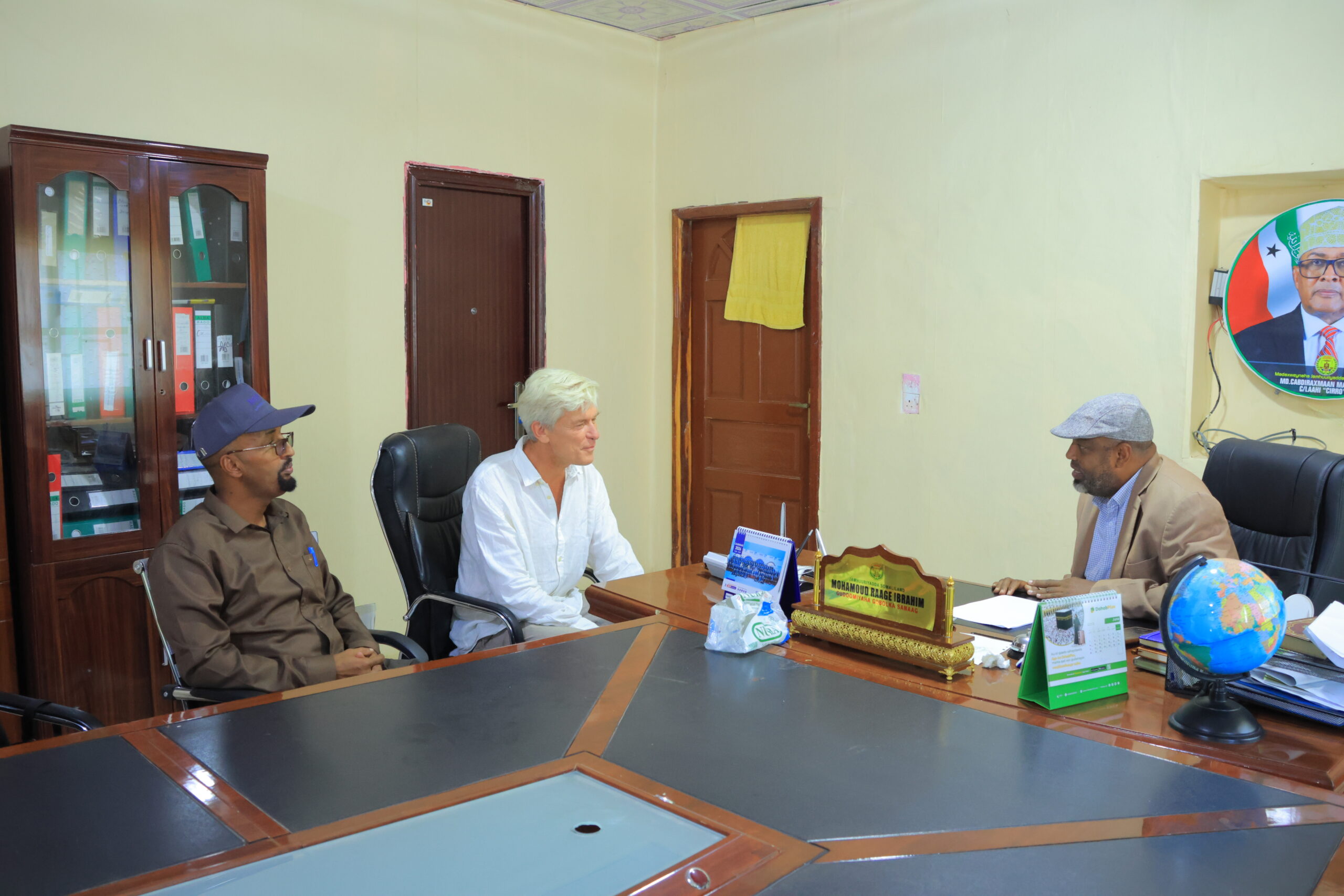
Da’ ar (left) and Governor Raage (right) at the beginning of our meeting
He presents himself to me jovially at first, trying some Danish on me because that’s where he received his education and it is where his family lives. He speaks excellent English and shows effusive educated white man solidarity. But I have been briefed that Raage is of the same Habar Je’lo sub-clan as the infamous Barkhad, and just want to finish this courtesy call quickly.
Who is Barkhad? Time to introduce him, as his spectre follows us during most of our visit. He appears to have been expelled from the UK with a criminal record in the mid-2000s, when he returned to his native Somaliland. Using his clan connections and his business acumen, he set up a frankincense trading company called Asli Maydi, which became the main supplier for the US essential oils giant doTerra. He tried to establish a monopoly in the frankincense sector and bribed his way through local authorities. Asli Maydi buoyed the demand for frankincense, driving up local prices. This caused a frenzy among frankincense producers (forests became overtapped), destabilizing the local market. Barkhad increasingly deployed predatory practices, underpaying or not paying suppliers at all, while he abused young women who were working for him for a pittance in sorting centres. Beeyo Maal formed as a vocal woman’s cooperative around these issues.
Their campaign gained traction: Vice made a stunning documentary about these abuses and the role of Barkhad and doTerra in them. Reports blaming doTerra for fake corporate social responsbility claims and permitting the abuse of workers by its local partner appeared in the BBC, the Guardian, Deutsche Welle and the New York Times. Following a petition by the Corporate Accountability Lab and the Horn of Africa Charity Organisation (mother organization of Beeyo Maal), US Customs and Border Protection issued an import ban in November 2024 against Asli Maydi. doTERRA had already ended its relationship with Asli Maydi in December 2023 but kept using the films vaunting its ‘corporate social responsibility’ projects in Somaliland nonetheless, maybe to justify its good but exceptionally expensive frankincense oil.
Barkhad disappeared from the scene for a while, allegedly taking several millions of accumulated funds and Dahabshiil bank loans along with him. But now he’s back in Somaliland, discretely, and is reportedly using his network and money to build up his empire again. DoTerra also wants to return to this lucrative market but they must first settle claims for unpaid wages and damages to the women sorters and harvesting communities. These circumstances have led me to keep a low profile for 2Mages, but my connection to Beeyo Maal as sole supplier is visible.
Given the clan connection of the new Sanaag governor to Barkhad – I later find out that the governor is staying in Barkhad’s own Erigabo mansion – I have asked Da’ar to present me as an academic researcher and capacity builder for Beeyo Maal. The kind of dull NGO profile that doesn’t interest powerful people. But for some reason Da’ar immediately starts talking about my company and asks me to show the governor and his staff my sample products, which I carry with me everywhere.
My range of products is designed to look impressive, giving me all the appearance of a competitor to Asli Maydi, benefiting from its downfall. After cursorily examining my wares, the governor informs me that the disruption of the frankincense trade by ‘some players’ has been very bad for the local economy. I nod with understanding and say something about rosy future perspectives. He then asks me if I know ‘Anjanette, the trouble maker’.
Anjanette DeCarlo is a respected American ecologist long established in Somaliland. She’s the leading specialist in frankincense forests and also advised doTerra; but Barkhad’s involvement turned nasty. She eventually accused him publicly of rape, contributing to his downfall. Now she has returned to her University of Vermont, whence she established the Save Frankincense initiative and continues her international advocacy. I should have lied, but I tell him that I do know her, and that I respect her academic work. Now Raage’s tone has changed from suspicious to hostile. Am I the same kind of ‘researcher’ she is?
Where is my letter of permission from the relevant ministry in Hargeisa, he presently asks me. I ask which ministry. He replies trade, environment, education, whatever. I tell him I have not been informed that I would need one. Then he goes on a rant about how insecure Sanaag is, and that I should understand that he cannot let me run the risk of being harmed as a foreigner because he would be personally held responsible, so without the authorization letter of a ministry stating exactly what I’m doing in his region, he can not allow me make any field visits. With that we can leave. I pick up my samples, trying hard to maintain my composure.
Just for the record: Sanaag is not insecure. Mubarik, who has twenty years experience providing security advice to NGOs, briefed me about possible security threats. In the areas I plan to visit, there are none, with the possible exception of Hasasha, because it is East of Erigabo in Warsangeli territory. Most current conflicts in the region are caused by local clans resisting the influx into their clan lands of goldseekers and mining companies with concessions signed in distant capitals. The deeper conflict in the region, opposing major clans and the governments of Puntland and Somaliland over control of region and its capital, is currently dormant. It is true that one of the ways of getting at other clans is by attacking their foreign guests, thus damaging their reputation. But nowadays that rarely happens, and by carefully composing my team in Hargeisa from different clans, I am reasonably well protected. The governor just doesn’t want me around.
 The rest of the day is spent on the phone, pulling strings to either obtain a letter from a Ministry in Hargeisa – a path we eventually abandon – or to convince the governor that another kind of invitation letter will be sufficient. Finally senior Muse Ismail figures will convince Raage to leave this matter to his deputy, who will receive us next morning. Amina provides me with an invitation letter from Beeyo Maal to visit their producers and provide a workshop. We get that signed and stamped by Luul Siciid and delivered to the secretary of the governor.


